Authors:Fan Xuesi, Yang Ji, Zhang Qiong, Liu Hai
Corresponding author: Liu Hai, Email:herryhai@ynu.edu.cn
Published:2026-10-10
DOI:10.3760/cma.j.cn115989-20260310-00113
ABSTRACT
Dry eye disease is a prevalent chronic ocular surface disorder, the onset and progression of which are closely associated with various environmental factors. With the acceleration of industrialization and urbanization, the impact of outdoor environmental pollutants on ocular surface health has garnered increasing attention. Current research indicates that diverse pollutants can disrupt ocular surface homeostasis through multiple pathways, including oxidative stress induction, inflammatory responses, DNA damage, mitochondrial dysfunction, apoptosis, and immune reactions, ultimately leading to decreased tear film stability and corneal epithelial injury, thereby triggering or exacerbating dry eye disease. In recent years, intervention strategies targeting oxidative stress and inflammatory pathways, such as antioxidants, natural bioactive compounds, and targeted signaling pathway modulation, have demonstrated potential applications in the prevention and treatment of pollutant-associated dry eye. This article summarizes the molecular mechanisms by which common outdoor pollutants contribute to dry eye, and emphasis is placed on elucidating the mechanisms underlying ocular surface damage induced by particulate matter, gaseous pollutants (such as ozone, nitrogen dioxide, sulfur dioxide, and volatile organic compounds), heavy metals, and emerging contaminants (such as microplastics), aiming to offer insights for further elucidating the mechanisms by which environmental pollutants contribute to dry eye pathogenesis and exploring novel therapeutic strategies.
KEYWORDS:
Dry eye disease;Air pollution;Particulate matter;Oxidative stress;Inflammation
COPYRIGHTS:
Copyright by Chinese Medical Association
No content published by the journals of Chinese Medical Association may be reproduced or abridged without authorization. Please do not use or copy the layout and design of the journals without permission.
All articles published represent the opinions of the authors, and do not reflect the official policy of the Chinese Medical Association or the Editorial Board, unless this is clearly specified.
Authors Info & Affiliations
Fan Xuesi
Graduate School of Kunming Medical University, Kunming 650500, China
Ophthalmology Department, Affiliated Hospital of Yunnan University, Kunming 650021, China
Yang Ji
Ophthalmology Department, Affiliated Hospital of Yunnan University, Kunming 650021, China
Zhang Qiong
Ophthalmology Department, Affiliated Hospital of Yunnan University, Kunming 650021, China
Liu Hai
Graduate School of Kunming Medical University, Kunming 650500, China
Ophthalmology Department, Affiliated Hospital of Yunnan University, Kunming 650021, China
Figures & Tables
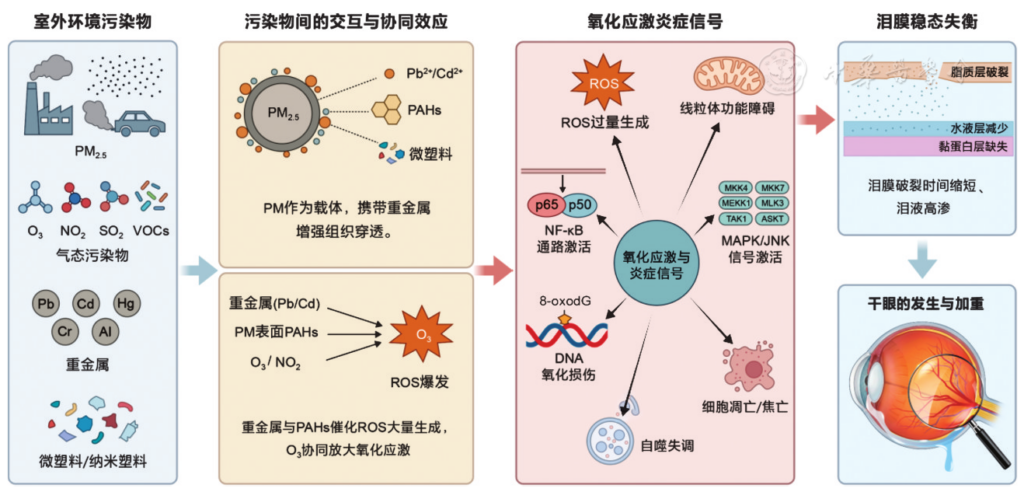
Figure 1 Molecular mechanisms by which common outdoor pollutants induce dry eye PM 2.5: particulate matter 2.5; ROS: reactive oxygen species; NF-κB: nuclear factor-kappa B
▼click to see the rest
References
[1] Stapleton F, Argüeso P, Asbell P, et al. TFOS DEWS III: digest[J]. Am J Ophthalmol, 2025, 279:451-553. DOI: 10.1016/j.ajo.2025.05.040.
▼click to see more references
[2] Clayton JA. Dry eye[J]. N Engl J Med, 2018, 378(23):2212-2223. DOI: 10.1056/NEJMra1407936.
[3] Zhang ZN, Yang DL, Liu H, et al. Effects of TCPP and TCEP exposure on human corneal epithelial cells: oxidative damage, cell cycle arrest, and pyroptosis[J]. Chemosphere, 2023, 331:138817. DOI: 10.1016/j.chemosphere.2023.138817.
[4] Yu D, Deng Q, Wang J, et al. Air pollutants are associated with dry eye disease in urban ophthalmic outpatients: a prevalence study in China[J]. J Transl Med, 2019, 17(1):46. DOI: 10.1186/s12967-019-1794-6.
[5] Mo Z, Fu Q, Lyu D, et al. Impacts of air pollution on dry eye disease among residents in Hangzhou, China: a case-crossover study[J]. Environ Pollut, 2019, 246:183-189. DOI: 10.1016/j.envpol.2018.11.109.[6] Kim Y, Choi YH, Kim MK, et al. Different adverse effects of air pollutants on dry eye disease: ozone, PM2.5, and PM10[J]. Environ Pollut, 2020, 265(Pt B):115039. DOI: 10.1016/j.envpol.2020.115039.
[7] Hwang SH, Choi YH, Paik HJ, et al. Potential importance of ozone in the association between outdoor air pollution and dry eye disease in South Korea[J]. JAMA Ophthalmol, 2016, 134(5):503-510. DOI: 10.1001/jamaophthalmol.2016.0139.
[8] McDonald M, Patel DA, Keith MS, et al. Economic and humanistic burden of dry eye disease in Europe, North America, and Asia: a systematic literature review[J]. Ocul Surf, 2016, 14(2):144-167. DOI: 10.1016/j.jtos.2015.11.002.
[9] World Health Organization. WHO air quality guidelines for particulate matter, ozone, nitrogen dioxide and sulfur dioxide: global update 2005[R]. Geneva: WHO, 2006.
[10] Wu Y, Jiao Z, Liu Y, et al. Association between air pollution and dry eye: insights from network toxicology and molecular docking analysis[J]. BMC Pharmacol Toxicol, 2025, 26(1):182. DOI: 10.1186/s40360-025-00994-0.
[11] Kalenik S, Zaczek A, Rodacka A. Air pollution-induced neurotoxicity: the relationship between air pollution, epigenetic changes, and neurological disorders[J]. Int J Mol Sci, 2025, 26(7):3402. DOI: 10.3390/ijms26073402.
[12] Cañadas P, Lantigua Y, Enríquez-de-Salamanca A, et al. Ocular surface pathology in patients suffering from mercury intoxication[J]. Diagnostics (Basel), 2021, 11(8):1326. DOI: 10.3390/diagnostics11081326.
[13] Jung SJ, Lee SH. Association between three heavy metals and dry eye disease in Korean adults: results of the Korean National Health and Nutrition Examination Survey[J]. Korean J Ophthalmol, 2019, 33(1):26-35. DOI: 10.3341/kjo.2018.0065.
[14] Liou YH, Chen YJ, Chen WL, et al. Associations between biomarkers of metal exposure and dry eye metrics in shipyard welders: a cross-sectional study[J]. Int J Environ Res Public Health, 2022, 19(4):2264. DOI: 10.3390/ijerph19042264.
[15] Cao F, Liu ZR, Ni QY, et al. Emerging roles of air pollution and meteorological factors in autoimmune eye diseases[J]. Environ Res, 2023, 231(Pt 1):116116. DOI: 10.1016/j.envres.2023.116116.
[16] Mu N, Wang H, Chen D, et al. A novel rat model of dry eye induced by aerosol exposure of particulate matter[J]. Invest Ophthalmol Vis Sci, 2022, 63(1):39. DOI: 10.1167/iovs.63.1.39.
[17] Niu L, Li L, Xing C, et al. Airborne particulate matter (PM2.5) triggers cornea inflammation and pyroptosis via NLRP3 activation[J]. Ecotoxicol Environ Saf, 2021, 207:111306. DOI: 10.1016/j.ecoenv.2020.111306.
[18] Fu Q, Lyu D, Zhang L, et al. Airborne particulate matter (PM2.5) triggers autophagy in human corneal epithelial cell line[J]. Environ Pollut, 2017, 227:314-322. DOI: 10.1016/j.envpol.2017.04.078.
[19] Kashiwagi K, Iizuka Y. Effect and underlying mechanisms of airborne particulate matter 2.5 (PM2.5) on cultured human corneal epithelial cells[J]. Sci Rep, 2020, 10(1):19516. DOI: 10.1038/s41598-020-76651-9.
[20] Li J, Tan G, Ding X, et al. A mouse dry eye model induced by topical administration of the air pollutant particulate matter 10[J]. Biomed Pharmacother, 2017, 96:524-534. DOI: 10.1016/j.biopha.2017.10.032.
[21] Ghosh AK, Bacellar-Galdino M, Iqbal S, et al. Topical porphyrin antioxidant protects against ocular surface pathology in a novel rabbit model for particulate matter-induced dry eye disease[J]. J Ocul Pharmacol Ther, 2022, 38(4):294-304. DOI: 10.1089/jop.2021.0131.
[22] Yanaka N, Koyama TA, Komatsu S, et al. Vitamin B6 suppresses NF-κB activation in LPS-stimulated mouse macrophages[J]. Int J Mol Med, 2005, 16(6):1071-1075.
[23] Hu J, Zeng Y, Tang L, et al. Topical application of VitB6 ameliorates PM2.5-induced dry eye via NFκB pathway in a murine model[J]. Biomedicines, 2025, 13(3):541. DOI: 10.3390/biomedicines13030541.
[24] Zhang M, Zhang R, Zhao X, et al. The role of oxidative stress in the pathogenesis of ocular diseases: an overview[J]. Mol Biol Rep, 2024, 51(1):454. DOI: 10.1007/s11033-024-09425-5.
[25] Ni Y, Zhang H, Chu L, et al. m6A modification-association with oxidative stress and implications on eye diseases[J]. Antioxidants (Basel), 2023, 12(2):510. DOI: 10.3390/antiox12020510.
[26] Wang Y, Tang N, Mao M, et al. Fine particulate matter (PM2.5) promotes IgE-mediated mast cell activation through ROS/Gadd45b/JNK axis[J]. J Dermatol Sci, 2021, 102(1):47-57. DOI: 10.1016/j.jdermsci.2021.02.004.
[27] Lu Y, Wan X, Ye H, et al. Sphingomyelin synthase 2 deletion mitigates oxidative stress-induced NF-κB activation via lipid metabolic reprogramming in dry eye disease[J]. Invest Ophthalmol Vis Sci, 2025, 66(15):22. DOI: 10.1167/iovs.66.15.22.
[28] Liu Z, Li Y, Bao J, et al. Astaxanthin ameliorates benzalkonium chloride-induced dry eye disease through suppressing inflammation and oxidative stress via Keap1-Nrf2/HO-1 signaling pathways[J]. AnimalModel Exp Med, 2025, 8(6):1056-1079. DOI: 10.1002/ame2.70000.
[29] Li B, Liu J, Zhang D, et al. Evodiamine promotes autophagy and alleviates oxidative stress in dry eye disease through the p53/mTOR pathway[J]. Invest Ophthalmol Vis Sci, 2025, 66(3):44. DOI: 10.1167/iovs.66.3.44.
[30] Deng K, Li W, Liang J, et al. Peptide DFCPPGFNTK mitigates dry eye pathophysiology by suppressing oxidative stress, apoptosis, inflammation, and autophagy: evidence from in vitro and in vivo models[J]. Curr Issues Mol Biol, 2025, 47(6):441. DOI: 10.3390/cimb47060441.
[31] Kabata Y, Terauchi R, Nakano T. Seasonal variations and environmental influences on dry eye operations in Japan[J]. Sci Rep, 2024, 14(1):30962. DOI: 10.1038/s41598-024-82051-0.
[32] Novaes P, Saldiva PH, Matsuda M, et al. The effects of chronic exposure to traffic derived air pollution on the ocular surface[J]. Environ Res, 2010, 110(4):372-374. DOI: 10.1016/j.envres.2010.03.003.
[33] Wolkoff P. Ocular discomfort by environmental and personal risk factors altering the precorneal tear film[J]. Toxicol Lett, 2010, 199(3):203-212. DOI: 10.1016/j.toxlet.2010.09.001.
[34] Cao F, Chen Y, Gui YC, et al. Association between traffic-related air pollution and risk of outpatient visits for dry eye disease in a megacity along the subtropical coast in South China[J]. BMC Public Health, 2025, 25(1):151. DOI: 10.1186/s12889-025-21319-0.
[35] Um SB, Kim NH, Lee HK, et al. Spatial epidemiology of dry eye disease: findings from South Korea[J]. Int J Health Geogr, 2014, 13:31. DOI: 10.1186/1476-072X-13-31.
[36] Meng Z, Liu Y, Wu D. Effect of sulfur dioxide inhalation on cytokine levels in lungs and serum of mice[J]. Inhal Toxicol, 2005, 17(6):303-307. DOI: 10.1080/08958370590922625.
[37] Lee H, Kim EK, Kang SW, et al. Effects of ozone exposure on the ocular surface[J]. Free Radic Biol Med, 2013, 63:78-89. DOI: 10.1016/j.freeradbiomed.2013.05.006.
[38] Lee H, Kim EK, Kim HY, et al. Effects of exposure to ozone on the ocular surface in an experimental model of allergic conjunctivitis[J]. PLoS One, 2017, 12(1):e0169209. DOI: 10.1371/journal.pone.0169209.
[39] Crobeddu B, Aragao-Santiago L, Bui LC, et al. Oxidative potential of particulate matter 2.5 as predictive indicator of cellular stress[J]. Environ Pollut, 2017, 230:125-133. DOI: 10.1016/j.envpol.2017.06.051.
[40] Mauderly JL, Samet JM. Is there evidence for synergy among air pollutants in causing health effects?[J]. Environ Health Perspect, 2009, 117(1):1-6. DOI: 10.1289/ehp.11654.
[41] 金梦怡, 刘真, 曾百卉, 等. 眼表稳态失衡与组织重建策略[J].厦门大学学报(自然科学版), 2024, 63(5):867-882. Jin MY, Liu Z, Zeng BH, et al. Ocular surface homeostasis imbalance and tissue reconstruction strategies[J]. J of Xiamen Univ(Natural Science), 2024, 63(5):867-882.
[42] Lee EH, Eum KD, Cho SI, et al. Acquired dyschromatopsia among petrochemical industry workers exposed to benzene[J]. Neurotoxicology, 2007, 28(2):356-363. DOI: 10.1016/j.neuro.2006.05.005.
[43] Hogie M, Guerbet M, Reber A. The toxic effects of toluene on the optokinetic nystagmus in pigmented rats[J]. Ecotoxicol Environ Saf, 2009, 72(3):872-878. DOI: 10.1016/j.ecoenv.2008.02.016.
[44] Vitoux MA, Kessal K, Baudouin C, et al. Formaldehyde gas exposure increases inflammation in an in vitro model of dry eye[J]. Toxicol Sci, 2018, 165(1):108-117. DOI: 10.1093/toxsci/kfy125.
[45] Vennam S, Georgoulas S, Khawaja A, et al. Heavy metal toxicity and the aetiology of glaucoma[J]. Eye (Lond), 2020, 34(1):129-137. DOI: 10.1038/s41433-019-0672-z.
[46] Singh J, Sharma M, Jain N, et al. Lactoferrin and its nano-formulations in rare eye diseases[J]. Indian J Ophthalmol, 2022, 70(7):2328-2334. DOI: 10.4103/ijo.IJO_303_22.
[47] 杨小飞, 钱立, 王向阳. 联合国决议“终止塑料污染”[J].生态经济, 2022, 38(5):1-4.
[48] 高丰蕾, 李景喜, 孙承君, 等. 微塑料富集金属铅元素的能力与特征分析[J]. 分析测试学报, 2017, 36(8):1018-1022. Gao FL, Li JX, Sun CJ, et al. Analysis on ability and characteristics of microplastics to enrich metal lead[J]. J Instrum Anal, 2017, 36(8):1018-1022.
[49] 缪心媛, 许晴雨, 夏苏干, 等. 聚苯乙烯纳米塑料致雄性小鼠睾丸睾酮合成障碍的作用机制研究[J]. 中国畜牧兽医, 2025, 52(4):1488-1498. DOI: 10.16431/j.cnki.1671-7236.2025.04.004. Miao XY, Xu QY, Xia SG, et al. Mechanism of action of testosterone synthesis disorder in male mice induced by polystyrene nanoplastics[J]. China Animal Husbandry & Veterinary Medicine, 2025, 52(4):1488-1498. DOI: 10.16431/j.cnki.1671-7236.2025.04.004.
[50] Zhou X, Wang G, An X, et al. Polystyrene microplastic particles: in vivo and in vitro ocular surface toxicity assessment[J]. Environ Pollut, 2022, 303:119126. DOI: 10.1016/j.envpol.2022.119126.
[51] 刘祖国, 刘靖, 陈文生, 等. 眼表上皮疾病的基础与临床研究进展[J]. 厦门大学学报(自然科学版), 2011, 50(02):489-494. Liu ZG, Liu J, Chen WS, et al. Basic and clinical research progress on ocular surface epithelial diseases[J]. J of Xiamen Univ(Natural Science), 2011, 50(2):489-494.
[52] 接英, 李思源. 重视干眼的规范化诊疗[J]. 眼科, 2019, 28(6):401-403. DOI: 10.13281/j.cnki.issn.1004-4469.2019.06.001. Jie Y, Li SY. Emphasis on the standardized diagnosis and treatment of dry eyes[J]. Ophthalmol Chin, 2019, 28(6):401-403. DOI: 10.13281/j.cnki.issn.1004-4469.2019.06.001.
[53] 宋文静, 晏晓明.《欧洲干眼专家组干眼炎症控制治疗推荐》解读[J]. 中华实验眼科杂志, 2024, 42(7):656-661. DOI: 10.3760/cma.j.cn115989-20231212-00208. Song WJ, Yan XM. Interpretation of Management of inflammation in dry eye disease: recommendations from a European panel of experts[J]. Chin J Exp Ophthalmol, 2024, 42(7):656-661. DOI: 10.3760/cma.j.cn115989-20231212-00208.
[54] 上海市中西医结合学会眼科专委会, 中国研究型医院学会眼科学与视觉科学专委会, 中国康复医学会视觉康复专委会干眼康复专业组. 中西医结合干眼超声雾化治疗专家共识(2025)[J]. 中华实验眼科杂志, 2025, 43(6):489-495. DOI: 10.3760/cma.j.cn115989-20250211-00031. Ophthalmology Committee of SACIM, Ophthalmology and Vision Science Committee of CRHA, Dry Eye Professional Group of Visual Rehabilitation Committee of CARM. Expert consensus on ultrasonic atomization treatment of dry eye with integrated medicine (2025)[J]. Chin J Exp Ophthalmol, 2025, 43(6):489-495. DOI: 10.3760/cma.j.cn115989-20250211-00031.
[55] 中国干眼患者睑缘管理专家共识(2025)专家组, 中国民族卫生协会干眼研究型学组. 中国干眼患者睑缘管理专家共识(2025)[J]. 中华实验眼科杂志, 2026, 44(2):105-111. DOI: 10.3760/cma.j.cn115989-20250712-00228. Expert workgroup of Expert consensus on eyelid management for dry eye patients in China (2025), Dry Eye Research Group of Chinese National Health Association. Expert consensus on eyelid management for dry eye patients in China (2025)[J]. Chin J Exp Ophthalmol, 2026, 44(2):105-111. DOI: 10.3760/cma.j.cn115989-20250712-00228.
[56] 杨军, 杨宇, 吴唯民, 等. 黄粉虫啮食降解聚苯乙烯[C]//中国化学会. 中国化学会第30届学术年会摘要集-第十分会: 高分子. 美国华盛顿特区: 美国化学学会(American Chemical Society, ACS), 2016:79.
[57] 陆成伟, 刘盛余, 邹长武, 等. 基于CMAQ的空气质量模拟预报系统构建[J]. 安徽农业科学, 2012, 40(10):6290-6291+6338. DOI: 10.13989/j.cnki.0517-6611.2012.10.038. Lu CW, Liu SY, Zou CW, et al. Introduction of a CMAQ-based air quality simulating and forecasting system[J]. J Anhui Agric Sci, 2012, 40(10):6290-6291+6338. DOI: 10.13989/j.cnki.0517-6611.2012.10.038.
[58] Germonpre P, Van Rompaey D, Balestra C. Evaluation of protection level, respiratory safety, and practical aspects of commercially available snorkel masks as personal protection devices against aerosolized contaminants and SARS-CoV2[J]. Int J Environ Res Public Health, 2020, 17(12):4347. DOI: 10.3390/ijerph17124347.
[59] 黎颖莉, 刘祖国, 邓应平, 等. 干眼临床诊疗的新认识及研究的新方向[J]. 中华实验眼科杂志, 2020, 38(3):161-164. DOI: 10.3760/cma.j.issn.2095-0160.2020.03.001. Li YL, Liu ZG, Deng YP, et al. New understanding and trends in the diagnosis and management of dry eye[J]. Chin J Exp Ophthalmol, 2020, 38(3):161-164. DOI: 10.3760/cma.j.issn.2095-0160.2020.03.001.
[60] Wolffsohn JS, Benítez-Del-Castillo JM, Loya-Garcia D, et al. TFOS DEWS III: diagnostic methodology[J]. Am J Ophthalmol, 2025, 279:387-450. DOI: 10.1016/j.ajo.2025.05.033.