Authors:Yang Yingrui, Xu Xun, Sun Jiali, Chen Yanyan, Zhang Mengyue, Huang Zixu, Fan Shuoning, Song Zongming
Corresponding authors: Fan Shuoning, Email: fanshuoning@126.com; Song Zongming, Email: szmeyes@126.com
Published:2026-09-10
DOI:10.3760/cma.j.cn115989-20251230-00459
ABSTRACT
Objective To explore the correlative factors for diabetic retinopathy (DR) in patients with type 2 diabetes mellitus (T2DM), so as to provide evidence for identifying high-risk populations in clinical practice.
Methods A single-center, retrospective cross-sectional real-world study was performed. A total of 960 T2DM patients admitted to Henan Provincial People’s Hospital from July 2023 to January 2025 were enrolled. Patients were divided into the DR group (326 cases) and non-DR group (634 cases) according to fundus photography. DR was further classified into non-proliferative DR (NPDR) and proliferative DR (PDR) based on the International Clinical Diabetic Retinopathy (ICDR) severity scale. Demographic data, diabetes duration, blood pressure, glycemic and lipid profiles, renal function indicators including urinary albumin-creatinine ratio (UACR) and estimated glomerular filtration rate (eGFR), liver function indicator aspartate aminotransferase-to-alanine aminotransferase ratio (AST/ALT), as well as serum protein and other laboratory parameters were collected. Correlation between DR severity and UACR stage and eGFR stage was evaluated by Spearman rank correlation. Binary and ordinal multinomial logistic regression were applied to identify independent correlative factors for DR prevalence and severity grading. Restricted cubic spline (RCS) was used to assess the non-linear relationship between UACR and DR. A discriminant model was constructed, and its performance was validated by receiver operating characteristic (ROC) curve and Bootstrap resampling. This study protocol was approved by the Ethics Committee of Henan Provincial People’s Hospital (No. HNEEC-2025[28]).
Results The overall prevalence of DR was 34.0%(326/960), including 19.4%(186/960) for NPDR and 14.6%(140/960) for PDR. Multivariate binary logistic regression showed that sex (female: OR=1.918, 95% CI: 1.374-2.676, P<0.001), diabetes duration ( OR=2.219, 95% CI: 1.580-3.117, P<0.001), glycated hemoglobin A1c (HbA1c) ( OR=1.073, 95% CI: 1.002-1.150, P=0.044), UACR stage (30-300 mg/g: OR=2.834, 95% CI: 1.901-4.225, P<0.001; >300 mg/g: OR=6.225, 95% CI: 3.220-12.034, P<0.001), AST/ALT ratio ( OR=0.566, 95% CI: 0.331-0.965, P=0.037), and eGFR stage 45-59 ml(min·1.73m 2): OR=0.387, 95% CI: 0.150-0.996, P=0.049; 30-44 ml(min·1.73m 2): OR=0.316, 95% CI: 0.107-0.932, P=0.037) were independent correlative factors for DR. DR severity grade was positively correlated with UACR stage ( r s=0.460, P<0.001) and negatively correlated with eGFR stage ( r s=-0.242, P<0.001). Ordinal multinomial logistic regression confirmed that elevated UACR was an independent correlative factor for worsening DR severity OR(95% CI)=3.648(2.912-4.568), and RCS analysis showed a significant non-linear dose-response association existed between UACR and DR. The area under the ROC curve (AUC) of the combined-indicator discriminant model reached 0.766, superior to any single indicator; among single indicators, UACR stage yielded higher AUC values than others.
Conclusions UACR stage, diabetes duration, sex, HbA1c, AST/ALT ratio and eGFR stage are independent correlative factors for DR in T2DM patients. UACR stage exerts the strongest effect on DR severity grading.
KEYWORDS:
Type 2 diabetes mellitus;Diabetic retinopathy;Associated factors;Real-world study
COPYRIGHTS:
Copyright by Chinese Medical Association
No content published by the journals of Chinese Medical Association may be reproduced or abridged without authorization. Please do not use or copy the layout and design of the journals without permission.
All articles published represent the opinions of the authors, and do not reflect the official policy of the Chinese Medical Association or the Editorial Board, unless this is clearly specified.
Authors Info & Affiliations
Yang Yingrui
Henan Provincial People’s Hospital, Henan Eye Hospital, People’s Hospital of Zhengzhou University, Zhengzhou 450003, China
Xu Xun
Shanghai General Hospital, Shanghai 200080, China
Sun Jiali
Henan Provincial People’s Hospital, Henan Eye Hospital, People’s Hospital of Zhengzhou University, Zhengzhou 450003, China
Chen Yanyan
The Eye Hospital of Wenzhou Medical University, Wenzhou 325027, China
Zhang Mengyue
The Eye Hospital of Wenzhou Medical University, Wenzhou 325027, China
Huang Zixu
Henan Provincial People’s Hospital, Henan Eye Hospital, People’s Hospital of Zhengzhou University, Zhengzhou 450003, China
Fan Shuoning
Henan Provincial People’s Hospital, Henan Eye Hospital, People’s Hospital of Zhengzhou University, Zhengzhou 450003, China
Song Zongming
Henan Provincial People’s Hospital, Henan Eye Hospital, People’s Hospital of Zhengzhou University, Zhengzhou 450003, China
Figures & Tables
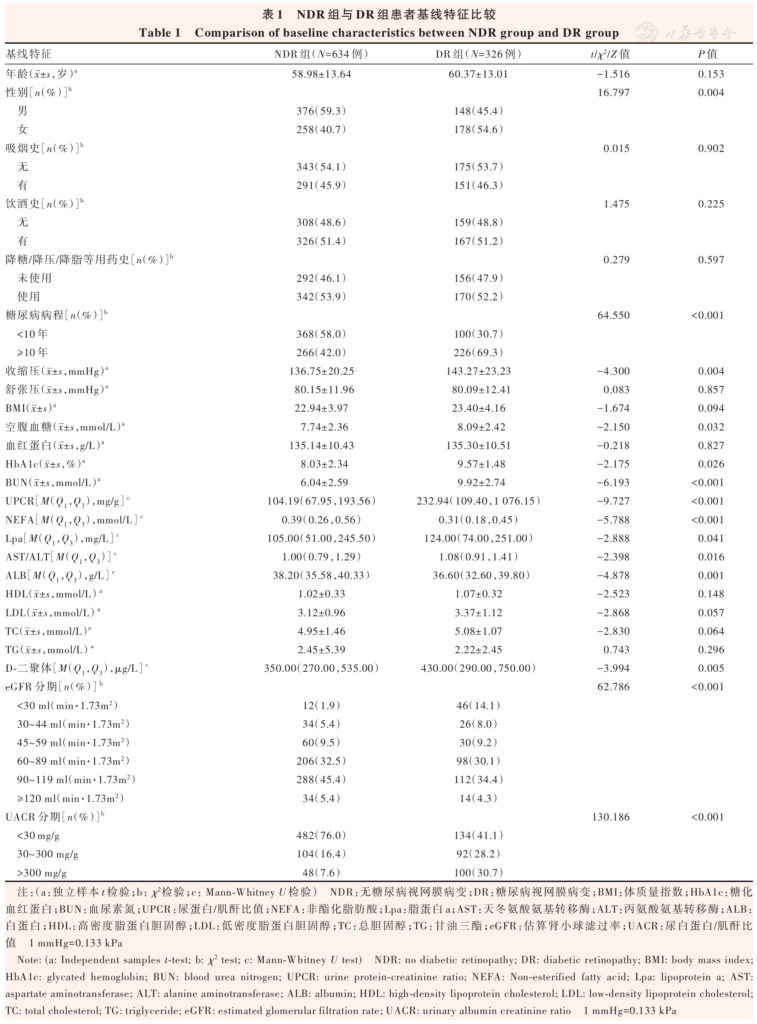
Table 1 Comparison of baseline characteristics between NDR group and DR group Note: (a: Independent samples t-test; b: χ 2 test; c: Mann-Whitney U test) NDR: no diabetic retinopathy; DR: diabetic retinopathy; BMI: body mass index; HbA1c: glycated hemoglobin; BUN: blood urea nitrogen; UPCR: urine protein-creatinine ratio; NEFA: Non-esterified fatty acid; Lpa: lipoprotein a; AST: aspartate aminotransferase; ALT: alanine aminotransferase; ALB: albumin; HDL: high-density lipoprotein cholesterol; LDL: low-density lipoprotein cholesterol; TC: total cholesterol; TG: triglyceride; eGFR: estimated glomerular filtration rate; UACR: urinary albumin creatinine ratio 1 mmHg=0.133 kPa
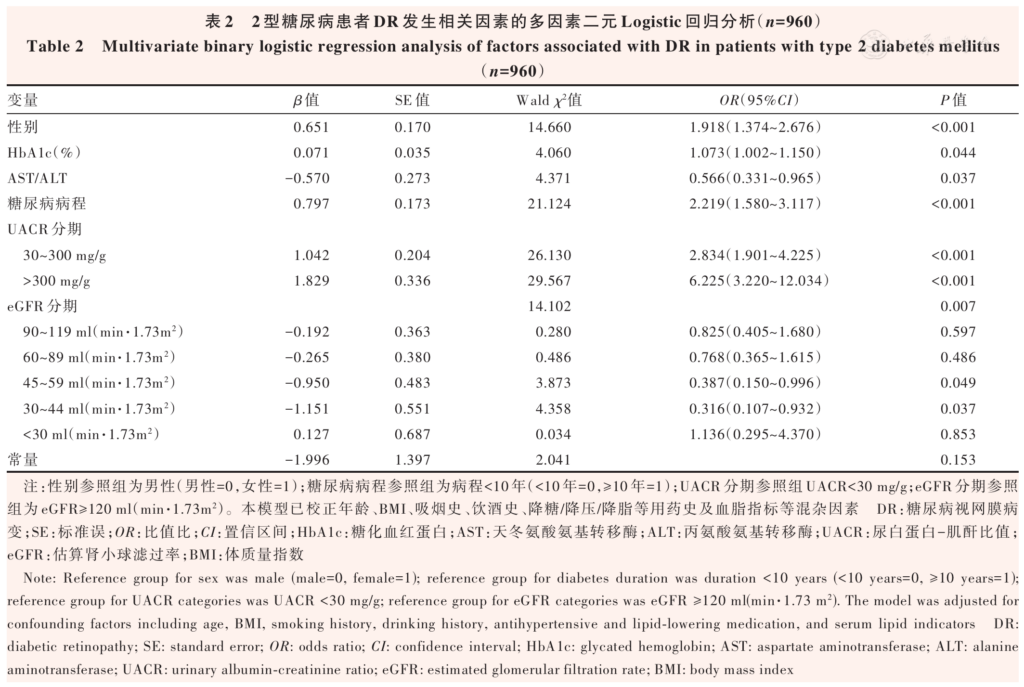
Table 2 Multivariate binary logistic regression analysis of factors associated with DR in patients with type 2 diabetes mellitus (n=960) Note: Reference group for sex was male (male=0, female=1); reference group for diabetes duration was duration <10 years (<10 years=0, ≥10 years=1); reference group for UACR categories was UACR <30 mg/g; reference group for eGFR categories was eGFR ≥120 ml(min·1.73 m 2). The model was adjusted for confounding factors including age, BMI, smoking history, drinking history, antihypertensive and lipid-lowering medication, and serum lipid indicators DR: diabetic retinopathy; SE: standard error; OR: odds ratio; CI: confidence interval; HbA1c: glycated hemoglobin; AST: aspartate aminotransferase; ALT: alanine aminotransferase; UACR: urinary albumin-creatinine ratio; eGFR: estimated glomerular filtration rate; BMI: body mass index
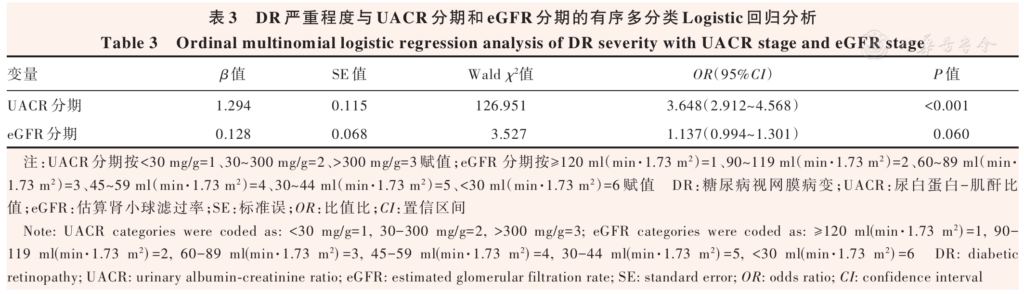
Table 3 Ordinal multinomial logistic regression analysis of DR severity with UACR stage and eGFR stage Note: UACR categories were coded as: <30 mg/g=1, 30-300 mg/g=2, >300 mg/g=3; eGFR categories were coded as: ≥120 ml(min·1.73 m 2)=1, 90-119 ml(min·1.73 m 2)=2, 60-89 ml(min·1.73 m 2)=3, 45-59 ml(min·1.73 m 2)=4, 30-44 ml(min·1.73 m 2)=5, <30 ml(min·1.73 m 2)=6 DR: diabetic retinopathy; UACR: urinary albumin-creatinine ratio; eGFR: estimated glomerular filtration rate; SE: standard error; OR: odds ratio; CI: confidence interval
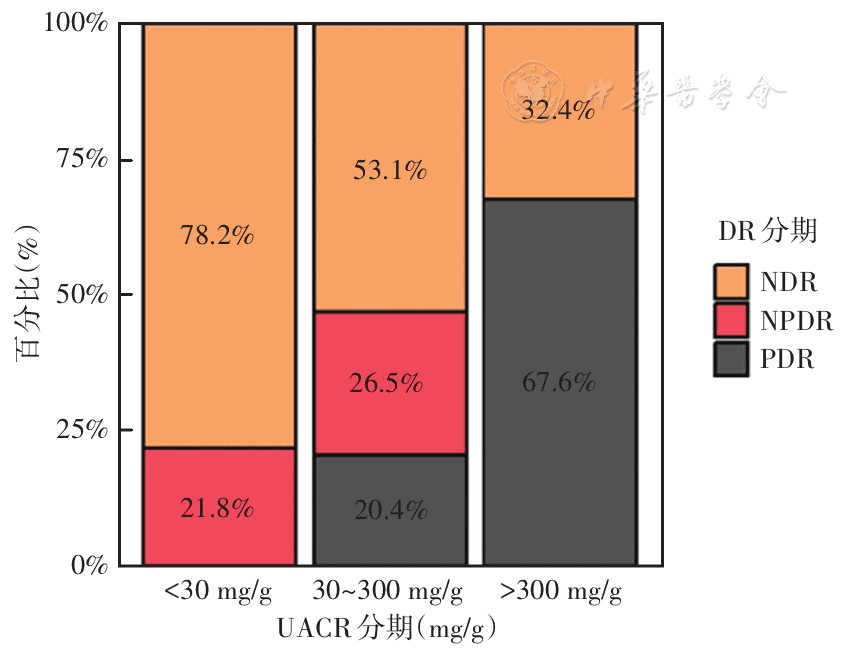
Figure 1 Distribution of constituent ratios of DR grades in patients with different UACR stages UACR: urinary albumin-creatinine ratio; DR: diabetic retinopathy; NDR: no diabetic retinopathy; NPDR: non-proliferative diabetic retinopathy; PDR: proliferative diabetic retinopathy
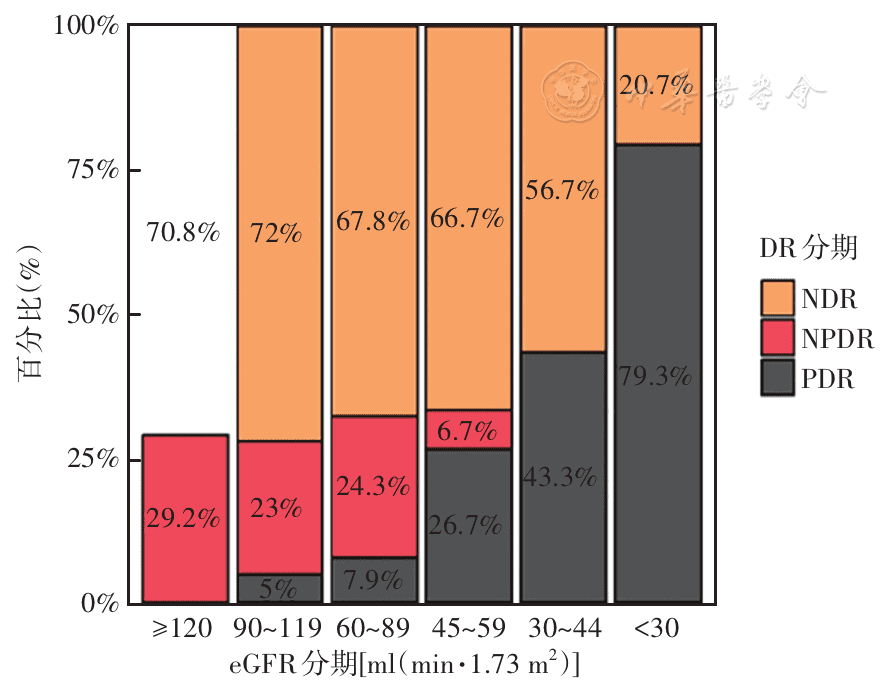
Figure 2 Distribution of constituent ratios of DR grades in patients with different eGFR stages eGFR: estimated glomerular filtration rate; DR: diabetic retinopathy; NDR: no diabetic retinopathy; NPDR: non-proliferative diabetic retinopathy; PDR: proliferative diabetic retinopathy
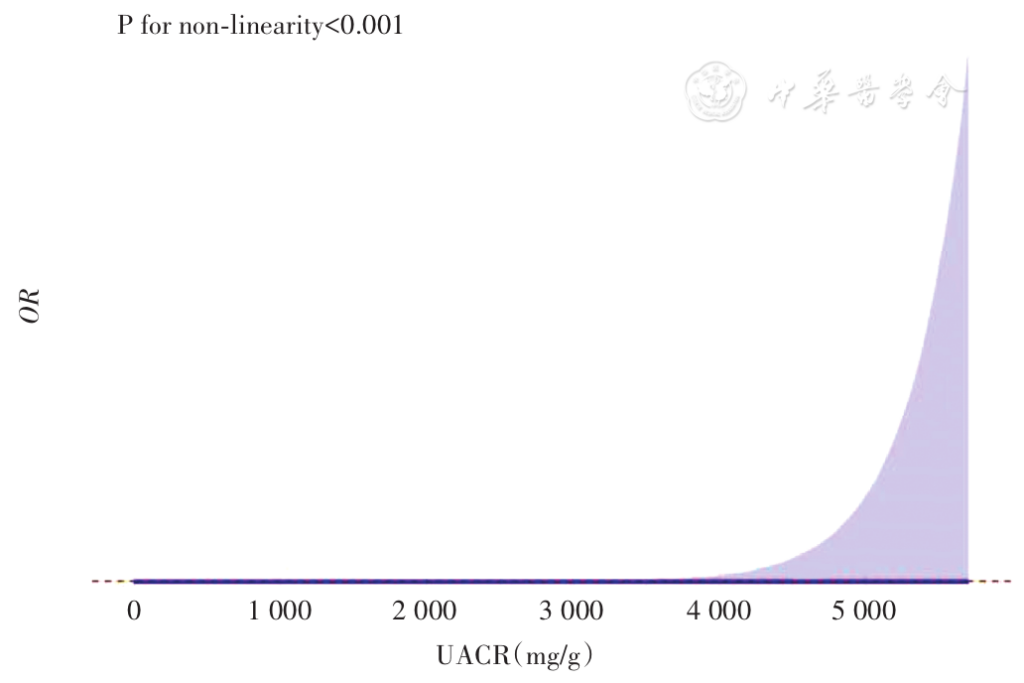
Figure 3 Restricted cubic spline dose-response relationship between UACR and DR The solid line represented the fitted OR curve, and the shaded area indicated the 95% confidence interval OR: odds ratio; UACR: urinary albumin-creatinine ratio; DR: diabetic retinopathy
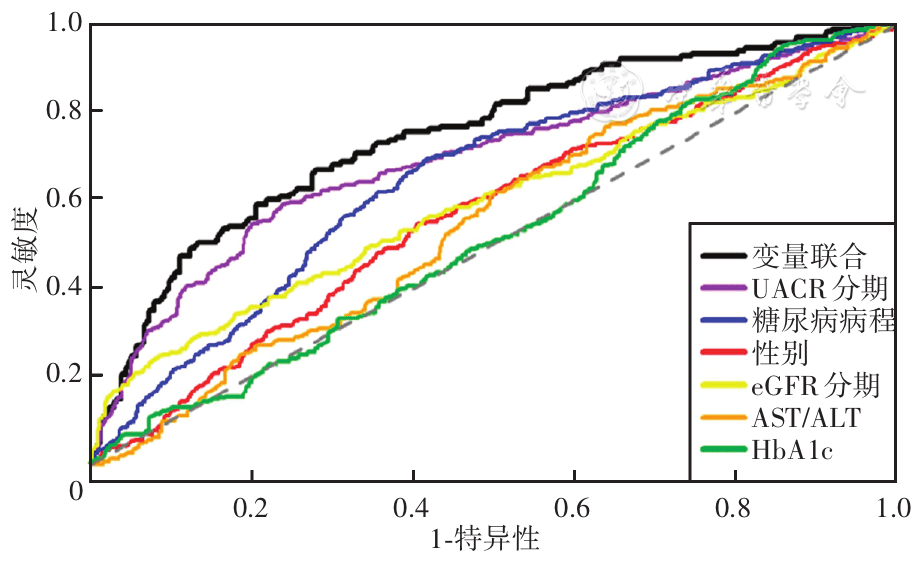
Figure 4 Comparison of ROC curves for each related factor ROC: receiver operating characteristic; UACR: urinary albumin-creatinine ratio; eGFR: estimated glomerular filtration rate; AST: aspartate aminotransferase; ALT: alanine aminotransferase; HbA1c: glycated hemoglobin
References click to collapse
[1] Dongling N, Ziwei K, Juanling S, et al. Universal nomogram for predicting referable diabetic retinopathy: a validated model for community and ophthalmic outpatient populations using easily accessible indicators[J]. Front Endocrinol (Lausanne), 2025, 16: 1557166. DOI: 10.3389/fendo.2025.1557166.
[2] Ding C, Wang N, Wang Z, et al. Integrated analysis of metabolomics and lipidomics in plasma of T2DM patients with diabetic retinopathy[J]. Pharmaceutics, 2022, 14(12):2751. DOI: 10.3390/pharmaceutics14122751.
[3] Chen J, Huang Y, Liu C, et al. Relationship between free fatty acids and diabetic retinopathy in male patients with type 2 diabetes[J]. Sci Rep, 2025, 15(1):20713. DOI: 10.1038/s41598-025-07001-w.
[4] 朱晓蓉, 杨芳远,张琳,等.北京市东城区与通州区的社区2型糖尿病人群糖尿病视网膜病变患病率及相关因素横断面研究[J].中华预防医学杂志,2024, 58(9):1324-1330. DOI: 10.3760/cma.j.cn112150-20240222-00136. Zhu XR, Yang FY, Zhang L, et al. Prevalence and associated factors of diabetic retinopathy among type 2 diabetes in Dongcheng District and Tongzhou District, Beijing City: a cross-sectional study[J]. Chin J Prevent Med, 2024, 58(9):1324-1330. DOI: 10.3760/cma.j.cn112150-20240222-00136.
[5] Hu G, Gu L, Wang R, et al. Ethanolamine as a biomarker and biomarker-based therapy for diabetic retinopathy in glucose-well controlled diabetic patients[J]. Sci Bull (Beijing), 2024, 69(12): 1920-1935. DOI: 10.1016/j.scib.2023.12.053.
[6] Zhang Y, Song X, Qi T, et al. Association between lipocalin-2 levels and diabetic retinopathy in patients with overweight/obese type 2 diabetes mellitus[J]. Ir J Med Sci, 2023, 192(6):2785-2792. DOI: 10.1007/s11845-023-03365-y.
[7] Tan H, Wang X, Ye K, et al. Prevalence and risk factors of diabetic retinopathy among Chinese adults with type 2 diabetes in a suburb of Shanghai, China[J/OL]. PLoS One, 2022, 17(10):e0275617[2026-02-12]. https://pubmed.ncbi.nlm.nih.gov/36194621/. DOI: 10.1371/journal.pone.0275617.
[8] Yang J, Jiang S. Development and validation of a model that predicts the risk of diabetic retinopathy in type 2 diabetes mellitus patients[J]. Acta Diabetol, 2023, 60(1):43-51. DOI: 10.1007/s00592-022-01973-1.
[9] 于晓濛, 王宁.2型糖尿病患者甲状腺激素敏感性与糖尿病视网膜病变相关性的研究[J]. 中国糖尿病杂志, 2025, 33(10):721-726. DOI: 10.3969/j.issn.1006-6187.2025.10.001. Yu XM, Wang N. Association between thyroid hormone sensitivity and diabetic retinopathy in patients with type 2 diabetes mellitus[J]. Chin J Diabetes, 2025, 33(10):721-726. DOI: 10.3969/j.issn.1006-6187.2025.10.001.
[10] 寸永康, 瞿静灵, 李博爱,等.云南省傣族地区2型糖尿病视网膜病变患病率及危险因素分析[J]. 昆明理工大学学报(自然科学版), 2024, 49(2):104-111. DOI: 10.16112/j.cnki.53-1223/n.2024.02.262. Cun YK, Qu JL, Li BA, et al. Prevalence and risk factor analysis of type 2 diabetic retinopathy in the Dai Ethnic Region of Yunnan Province[J]. J Kunming Univ Sci Tech (Natural Science Edition), 2024, 49(2): 104-111. DOI: 10.16112/j.cnki.53-1223/n.2024.02.262.
[11] Karatoy Erdem B, Akbas H, Yılmaz VT, et al. Diagnostic performance of urinary podocyte biomarkers and TGF-β/Smad signaling markers in diabetic nephropathy[J]. J Diabetes Metab Disord, 2027, 25(1):89. DOI: 10.1007/s40200-026-01925-4.
[12] Stevens LA, Li S, Kurella Tamura M, et al. Comparison of the CKD Epidemiology Collaboration (CKD-EPI) and Modification of Diet in Renal Disease (MDRD) study equations: risk factors for and complications of CKD and mortality in the Kidney Early Evaluation Program (KEEP)[J]. Am J Kidney Dis, 2011, 57(3 Suppl 2):S9-S16. DOI: 10.1053/j.ajkd.2010.11.007.
[13] 侯翌葳, 杨宇, 易力,等.糖尿病视网膜病变和年龄相关性黄斑变性的共同危险因素的meta分析[J]. 中国老年学杂志, 2026, 46(2): 257-264.
[14] Zhou X, Hou G, Wang X, et al. Metabolomic studies reveal and validate potential biomarkers of diabetic retinopathy in two Chinese datasets with type 2 diabetes: a cross-sectional study[J]. Cardiovasc Diabetol, 2024, 23(1):439. DOI: 10.1186/s12933-024-02535-1.
[15] Li Y, Hu B, Lu L, et al. Development and external validation of a predictive model for type 2 diabetic retinopathy[J]. Sci Rep, 2024, 14(1): 16741. DOI: 10.1038/s41598-024-67533-5.
[16] Li M, Wang Y, Liu Z, et al. Females with type 2 diabetes mellitus are prone to diabetic retinopathy: a twelve-province cross-sectional study in China[J]. J Diabetes Res, 2020, 2020:5814296. DOI: 10.1155/2020/5814296.
[17] Cherchi S, Gigante A, Spanu MA, et al. Sex-gender differences in diabetic retinopathy[J]. Diabetology, 2020, 1(1):1-10.
[18] Siddiqui K, George TP, Alosaimi J, et al. Level of hormones in menopause in relation to diabetic retinopathy among type 2 diabetic women[J]. Health Care Women Int, 2021, 42(1):58-66. DOI: 10.1080/07399332.2020.1798962.
[19] Meng Y, Yang X, Fan Y, et al. Association between hormone levels and retinopathy in patients with type 2 diabetes: a cross-sectional study[J]. Transl Vis Sci Technol, 2025, 14(2):17. DOI: 10.1167/tvst.14.2.17.
[20] Mokhtarpour K, Yadegar A, Mohammadi F, et al. Impact of gender on chronic complications in participants with type 2 diabetes: evidence from a cross-sectional study[J/OL]. Endocrinol Diabetes Metab, 2024, 7(3):e488[2026-01-26]. https://pubmed.ncbi.nlm.nih.gov/38718275/. DOI: 10.1002/edm2.488.
[21] Li X, Hao W, Lin S, et al. Association between AST/ALT ratio and diabetic retinopathy risk in type 2 diabetes: a cross-sectional investigation[J]. Front Endocrinol (Lausanne), 2024, 15:1361707. DOI: 10.3389/fendo.2024.1361707.
[22] Luo J, Yu F, Zhou H, et al. AST/ALT ratio is an independent risk factor for diabetic retinopathy: a cross-sectional study[J/OL]. Medicine (Baltimore), 2024, 103(26):e38583[2026-02-12]. https://pubmed.ncbi.nlm.nih.gov/38941365/. DOI: 10.1097/MD.0000000000038583.
[23] 王玲, 罗艳, 符茂真,等.高血压患者AST/ALT比值与代谢综合征的相关性研究[J]. 中国现代医生,2025, 63(23):14-18. DOI: 10.3969/j.issn.1673-9701.2025.23.004. Wang L, Luo Y, Fu MZ, et al. Correlation between AST/ALT ratio and metabolic syndrome in hypertensive patients[J]. China Modern Doctor, 2025, 63(23):14-18. DOI: 10.3969/j.issn.1673-9701.2025.23.004.
[24] Kwon SS, Lee SG. A high alanine aminotransferase/aspartate aminotransferase ratio determines insulin resistance and metabolically healthy/unhealthy obesity in a general adult population in Korea: the Korean National Health and Nutritional Examination Survey 2007—2010[J]. Exp Clin Endocrinol Diabetes, 2019, 127(10):677-684. DOI: 10.1055/a-0752-0217.
[25] Lin MS, Lin HS, Chang ML, et al. Alanine aminotransferase to aspartate aminotransferase ratio and hepatitis B virus on metabolic syndrome: a community-based study[J]. Front Endocrinol (Lausanne), 2022, 13: 922312. DOI: 10.3389/fendo.2022.922312.
[26] Liang Y, Zhang X, Mei W, et al. Predicting vision-threatening diabetic retinopathy in patients with type 2 diabetes mellitus: systematic review, meta-analysis, and prospective validation study[J]. J Glob Health, 2024, 14:04192. DOI: 10.7189/jogh.14.04192.
[27] Chen X, Zhang X, Gong Z, et al. The link between diabetic retinal and renal microvasculopathy is associated with dyslipidemia and upregulated circulating level of cytokines[J]. Front Public Health, 2022, 10:1040319. DOI: 10.3389/fpubh.2022.1040319.
[28] Snchez-Valencia PE, Díaz-García JD, Leyva-Leyva M, et al. Frequency of tumor necrosis factor-α, interleukin-6, and interleukin-10 gene polymorphisms in Mexican patients with diabetic retinopathy and diabetic kidney disease[J]. Pathophysiology, 2025, 32(2):14. DOI: 10.3390/pathophysiology32020014.
[29] Ma R, Zheng C, Niu Y, et al. Changes of retinal microvascular parameters in patients with type 2 diabetes mellitus with or without diabetic kidney disease[J]. Front Endocrinol (Lausanne), 2026, 17: 1727260. DOI: 10.3389/fendo.2026.1727260.