Authors:Zhang Yongqian, He Lifen, Wang Jiusan, Xie Yongxian, Cao Qian, Li Lan
Corresponding author: Li Lan, Email:641106144@qq.com
Published:2026-10-10
DOI:10.3760/cma.j.cn115989-20260306-00095
ABSTRACT
Objective To investigate the correlation and predictive value of interleukin (IL)-6, transforming growth factor-β (TGF-β), and IL-17 expression levels in peripheral blood and tears with corneal graft rejection after penetrating keratoplasty (PKP).
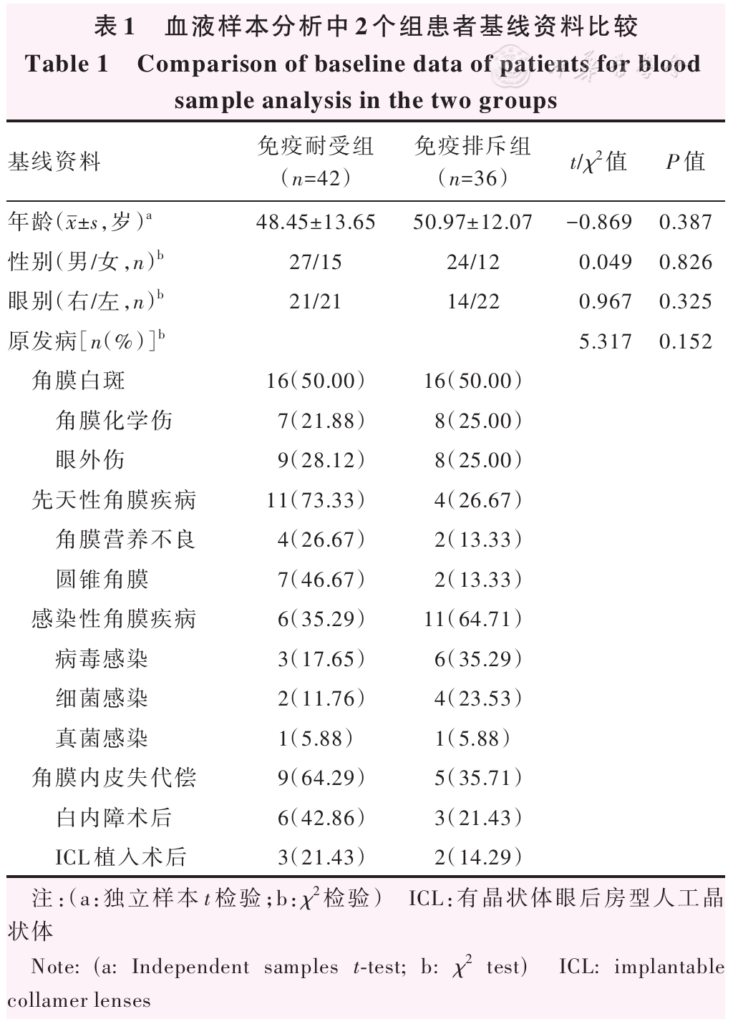
Methods A cross-sectional study was conducted. A total of 78 patients (78 eyes) with PKP who visited the First People’s Hospital of Kunming from November 2023 to November 2024 were enrolled. Ocular conditions, medical history, and general data of patients were recorded. According to the corneal rejection index (RI), patients were divided into an immune tolerance group (42 cases, RI<5 points) and an immune rejection group (36 cases, RI≥5 points). Peripheral blood and tear samples were collected. Due to insufficient tear collection in some patients and the use of eye drops within 2 hours before collection, some patients were excluded. Finally, tear samples from 32 patients were included, with 16 in the immune tolerance group and 16 in the immune rejection group. Enzyme-linked immunosorbent assay (ELISA) was used to detect the concentrations of IL-6, TGF-β, and IL-17 in peripheral blood and tears, and the differences in cytokines between the two groups were compared. Spearman rank correlation analysis was used to evaluate the correlation of IL-6, TGF-β, and IL-17 with corneal graft rejection. Logistic regression was used to analyze the influencing factors of corneal graft rejection. Receiver operating characteristic (ROC) curves were used to evaluate the predictive value of peripheral blood and tear cytokines for corneal graft rejection. This study complied with the Declaration of Helsinki. The study protocol was approved by the Ethics Committee of the First People’s Hospital of Kunming (No. YSL2023-67). All participants were informed of the purpose of this study and signed informed consent forms.
Results The concentrations of IL-6 and IL-17, IL-6/TGF-β ratio, and IL-17/TGF-β ratio in peripheral blood and tears in the immune tolerance group were lower than those in the immune rejection group, and the differences were statistically significant (peripheral blood: t=-2.688, -2.945, Z=-6.084, -6.124, all P<0.05; tears: t=-3.511, -3.555, Z=-3.618, -3.580, all P<0.05). The TGF-β concentrations in peripheral blood and tears in the immune tolerance group were higher than those in the immune rejection group, and the differences were statistically significant (t=7.620, 3.032, both P<0.05). Spearman correlation analysis showed that IL-6 and IL-17 concentrations in peripheral blood and tears of PKP patients were positively correlated with corneal graft rejection (peripheral blood: rs=0.334, 0.343, both P<0.05; tears: rs=0.518, 0.538, both P<0.05), while TGF-β concentrations in peripheral blood and tears were negatively correlated with corneal graft rejection (rs=-0.662, -0.502, both P<0.05). Univariate binary logistic regression analysis showed that IL-6, TGF-β, and IL-17 in peripheral blood and tears were all influencing factors for corneal graft rejection (all P<0.05); multivariate binary logistic regression analysis showed that TGF-β in peripheral blood and tears was an independent protective factor for corneal graft rejection (both P<0.05). ROC curve results showed that the area under the curve (AUC) of peripheral blood TGF-β for predicting corneal graft rejection was 0.883 (P<0.001), with a sensitivity of 72.2% and specificity of 92.9%. The AUC of tear TGF-β for predicting corneal graft rejection was 0.789 (P=0.005), with a sensitivity of 81.3% and specificity of 68.7%.
Conclusions Corneal graft rejection is positively correlated with IL-6 and IL-17 concentrations in peripheral blood and tears, and negatively correlated with TGF-β concentration. TGF-β in peripheral blood and tears is an independent protective factor for the occurrence of corneal graft rejection and has high predictive value for the occurrence of corneal graft rejection. Moreover, peripheral blood TGF-β has better predictive value than tear TGF-β, making it a potentially superior biomarker for predicting corneal graft rejection.
KEYWORDS:
Corneal transplantation;Immune rejection;Interleukin-6;Transforming growth factor-β;Interleukin-17
COPYRIGHTS:
Copyright by Chinese Medical Association
No content published by the journals of Chinese Medical Association may be reproduced or abridged without authorization. Please do not use or copy the layout and design of the journals without permission.
All articles published represent the opinions of the authors, and do not reflect the official policy of the Chinese Medical Association or the Editorial Board, unless this is clearly specified.
Authors Info & Affiliations
Zhang Yongqian
Department of Ophthalmology, the Second People’s Hospital of Baoshan, Baoshan 678000, China
Zhang Yongqian was a postgraduate student at the First People’s Hospital of Kunming
He Lifen
Department of Ophthalmology, the Second People’s Hospital of Baoshan, Baoshan 678000, China
Wang Jiusan
Department of Ophthalmology, the Second People’s Hospital of Baoshan, Baoshan 678000, China
Xie Yongxian
Department of Ophthalmology, Weixin County People’s Hospital, Zhaotong 657900, China
Xie Yongxian was a refresher physician at the First People’s Hospital of Kunming
Cao Qian
Department of Ophthalmology, Calmette Hospital Affiliated to Kunming Medical University, the First People’s Hospital of Kunming, Kunming 650224, China
Li Lan
Department of Ophthalmology, Calmette Hospital Affiliated to Kunming Medical University, the First People’s Hospital of Kunming, Kunming 650224, China
Figures & Tables
▼click to see the rest
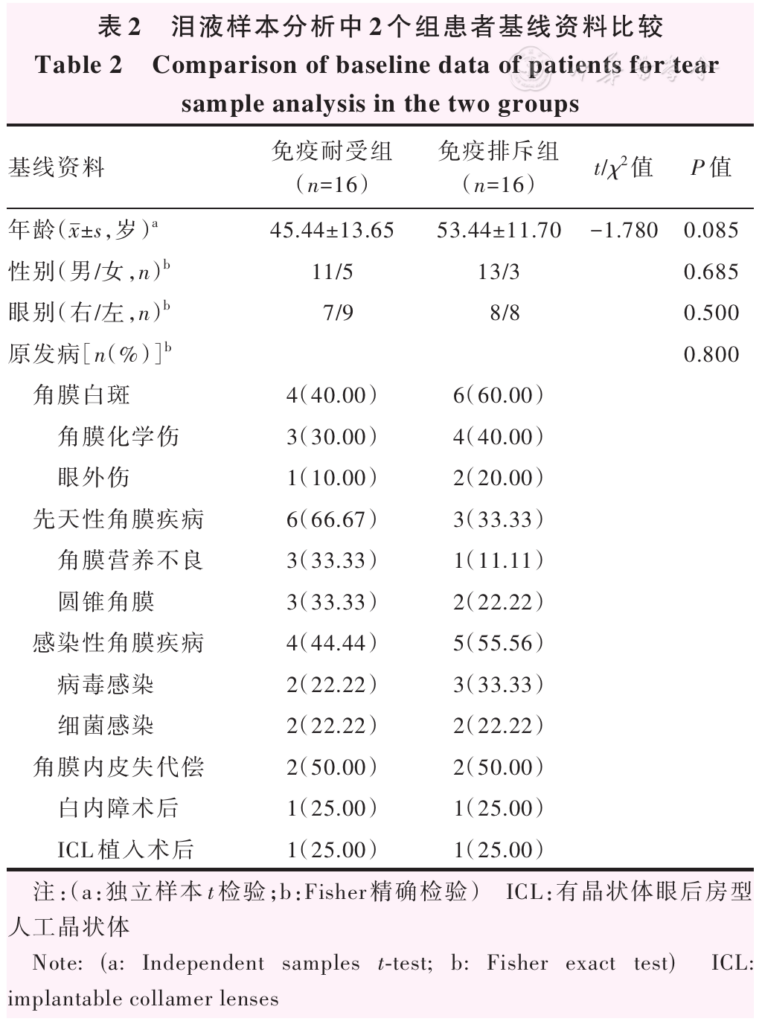
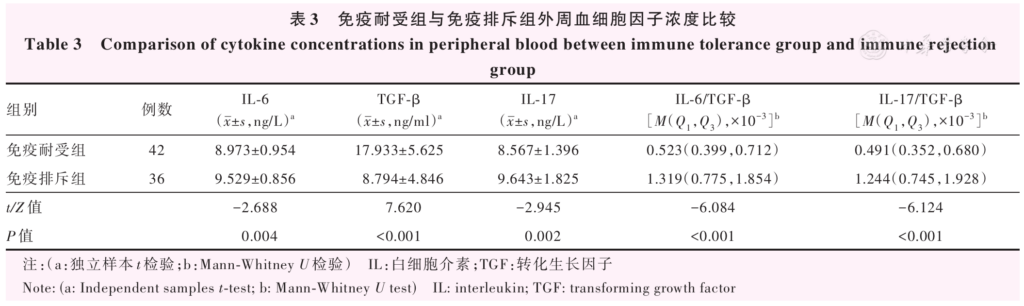
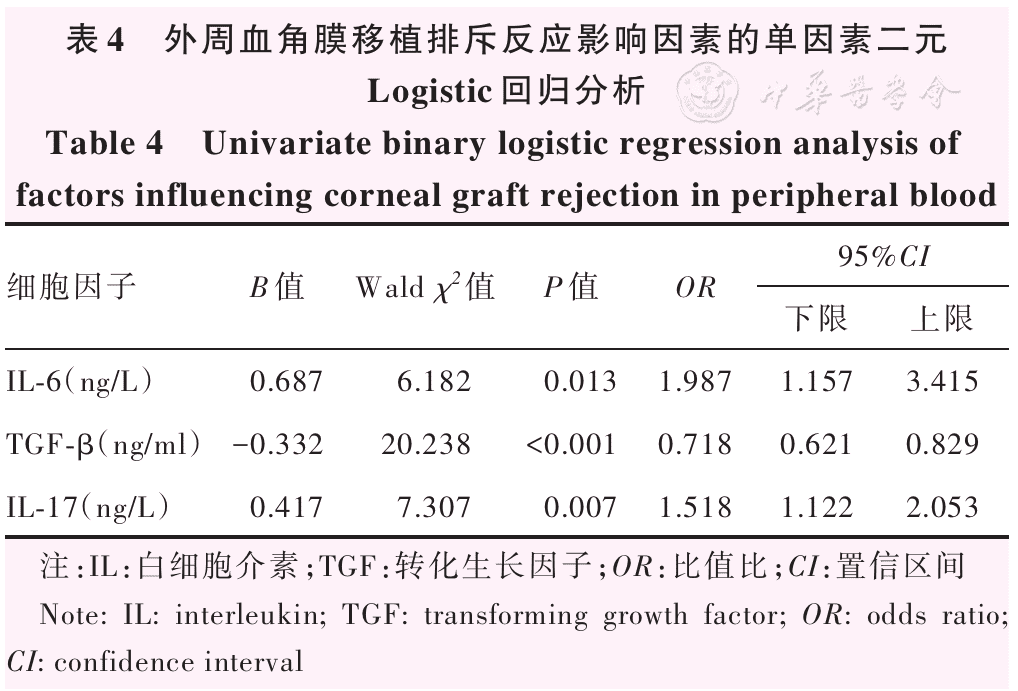
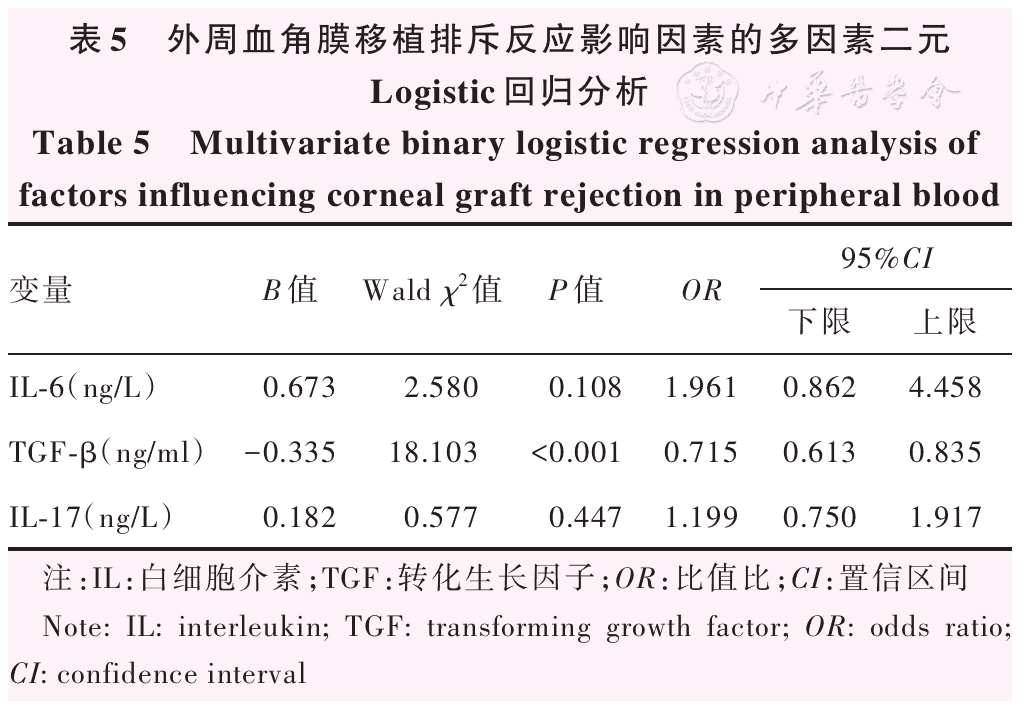
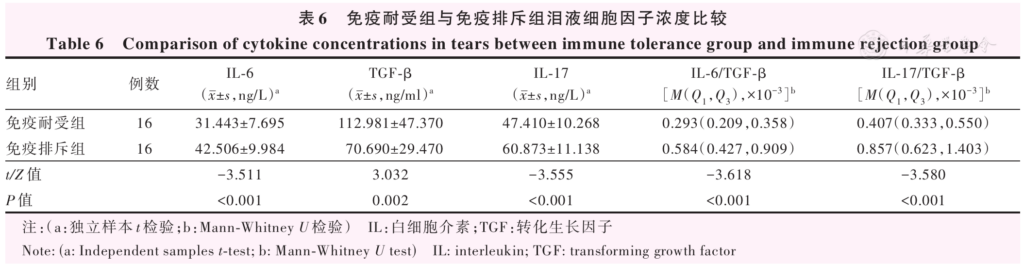
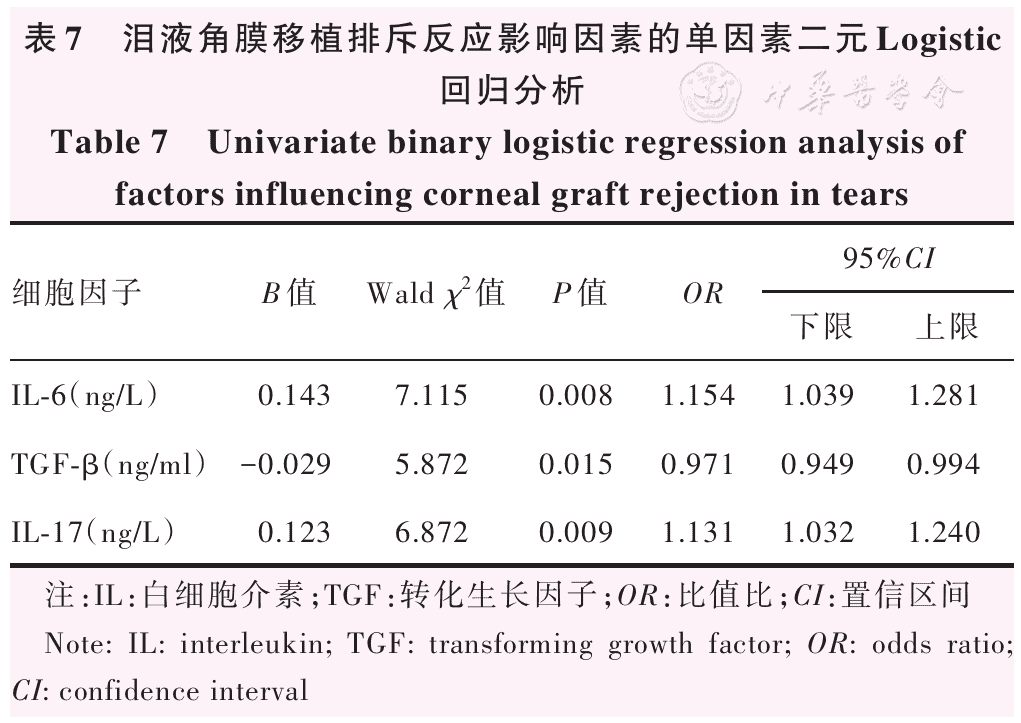
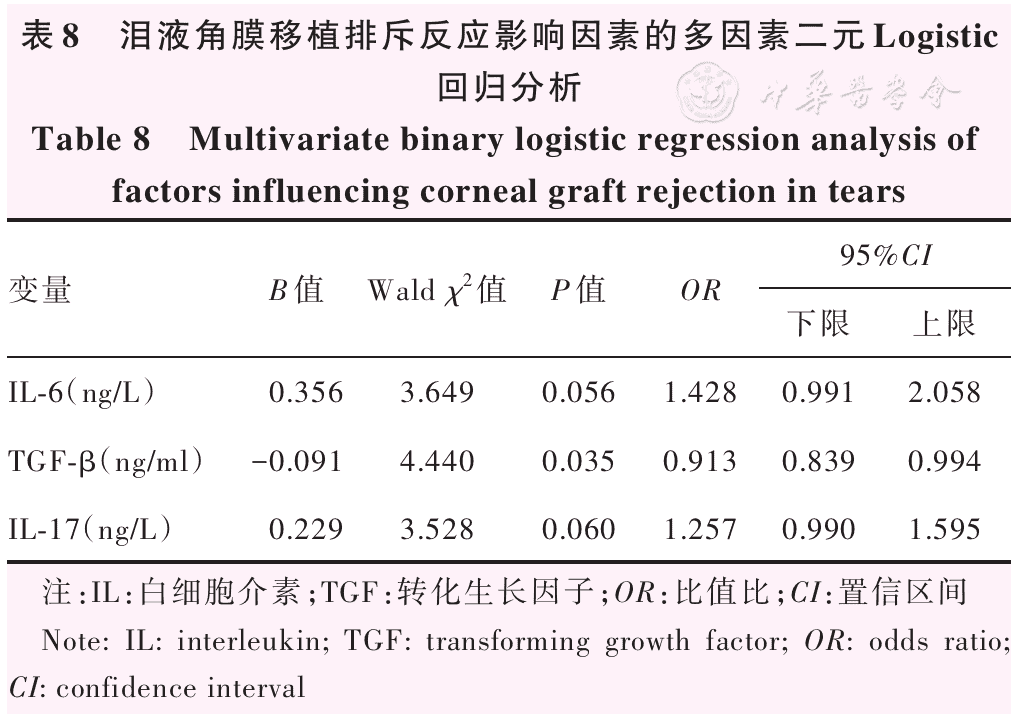
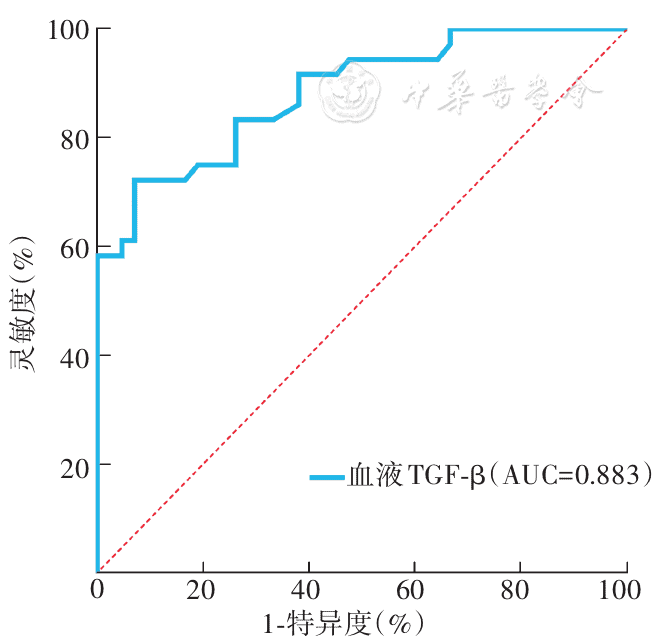
Figure 1 ROC curve of peripheral blood TGF-β predicting corneal graft rejection TGF: transforming growth factor; ROC: receiver operating characteristic; AUC: area under the curve
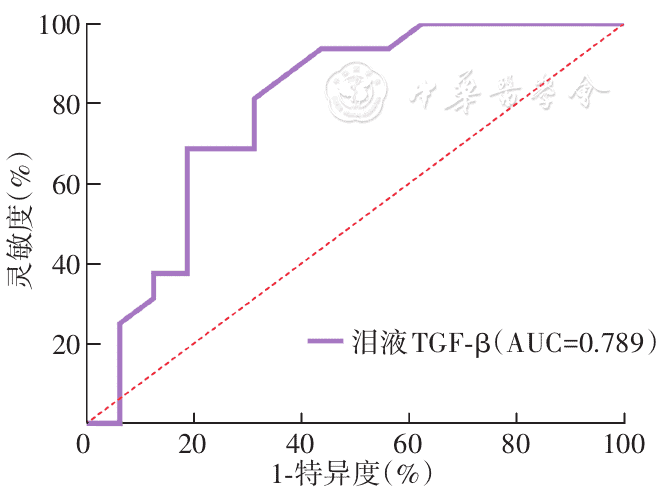
Figure 2 ROC curve of TGF-β in tears predicting corneal graft rejection TGF: transforming growth factor; ROC: receiver operating characteristic; AUC: area under the curve
References
[1] Keye P, Lapp T, Böhringer D, et al. Clinical course of different types of immune reactions following keratoplasty[J]. Klin Monbl Augenheilkd, 2023, 240(3):288-294. DOI: 10.1055/a-1554-5362.
▼click to see more references
[2] Cao Q, Li Y, Li Y, et al. miR-151-5p alleviates corneal allograft rejection by activating PI3K/AKT signaling pathway and balancing Th17/Treg after corneal transplantation via targeting IL-2Rɑ[J]. Ann Transl Med, 2021, 9(18):1410. DOI: 10.21037/atm-21-2054.
[3] Wu XS, Lu XL, Wu J, et al. Tocilizumab promotes corneal allograft survival in rats by modulating Treg-Th17 balance[J]. Int J Ophthalmol, 2019, 12(12):1823-1831. DOI: 10.18240/ijo.2019.12.02.
[4] Larkin DF, Calder VL, Lightman SL. Identification and characterization of cells infiltrating the graft and aqueous humour in rat corneal allograft rejection[J]. Clin Exp Immunol, 1997, 107(2):381-391. DOI: 10.1111/j.1365-2249.1997.279-ce1171.x.
[5] Singh R, Gupta N, Vanathi M, et al. Corneal transplantation in the modern era[J]. Indian J Med Res, 2019, 150(1):7-22. DOI: 10.4103/ijmr.IJMR_141_19.
[6] Ruiz de Morales J, Puig L, Daudén E, et al. Critical role of interleukin (IL)-17 in inflammatory and immune disorders: an updated review of the evidence focusing in controversies[J]. Autoimmun Rev, 2020, 19(1):102429. DOI: 10.1016/j.autrev.2019.102429.
[7] Wang X, Wang W, Xu J, et al. All-trans retinoid acid promotes allogeneic corneal graft survival in mice by regulating Treg-Th17 balance in the presence of TGF-β[J]. BMC Immunol, 2015, 16:17. DOI: 10.1186/s12865-015-0082-3.
[8] 阿婷曦,邵春益,傅瑶.调节性T细胞在眼表疾病中作用的研究进展[J]. 上海交通大学学报(医学版), 2022, 42(8):1145-1150. DOI: 10.3969/j.issn.1674-8115.2022.08.021. A TX, Shao CY, Fu Y. Research progress on the role of regulatory T cells in ocular surface diseases[J]. J Shanghai Jiaotong Univ (Medical Science), 2022, 42(8):1145-1150. DOI: 10.3969/j.issn.1674-8115.2022.08.021.
[9] Moreau JM, Velegraki M, Bolyard C, et al. Transforming growth factor-β1 in regulatory T cell biology[J]. Sci Immunol, 2022, 7(69):eabi4613. DOI: 10.1126/sciimmunol.abi4613.
[10] Friedmann J, Schuster A, Reichelt-Wurm S, et al. Serum IL-6 predicts risk of kidney transplant failure independently of immunological risk[J]. Transpl Immunol, 2024, 84:102043. DOI: 10.1016/j.trim.2024.102043.
[11] Funding M, Vorum H, Nexø E, et al. Soluble CD163 and interleukin-6 are increased in aqueous humour from patients with endothelial rejection of corneal grafts[J]. Acta Ophthalmol Scand, 2005, 83(2):234-239. DOI: 10.1111/j.1600-0420.2005.00397.x.
[12] Lee S, Narimatsu A, Heydarian N, et al. IL-6 amplifies corneal transplant alloimmunity by inducing dysfunctional IFN-γ-secreting Treg through the VEGFA-VEGFR1 axis[J]. Transpl Immunol, 2025, 93:102284. DOI: 10.1016/j.trim.2025.102284.
[13] Hua J, Inomata T, Chen Y, et al. Pathological conversion of regulatory T cells is associated with loss of allotolerance[J]. Sci Rep, 2018, 8(1):7059. DOI: 10.1038/s41598-018-25384-x.
[14] Wang J, Zhao X, Wan YY. Intricacies of TGF-β signaling in Treg and Th17 cell biology[J]. Cell Mol Immunol, 2023, 20(9):1002-1022. DOI: 10.1038/s41423-023-01036-7.
[15] Bystrov A, Kuznetzov AA. Dynamics of VEGF and TGF-β indices in lacrimal fluid as a predictor of corneal transplant rejection[J]. Russ J Immunol, 2024, 28(1):103-108. DOI: 10.46235/1028-7221-16977-DOV.
[16] 张志鹏,胥辉豪,李婧, 等. TGF-β1滴眼对犬穿透性角膜移植术后免疫排斥反应的试验[J]. 中国兽医杂志, 2015, 51(2):63-65. DOI: 10.3969/j.issn.0529-6005.2015.02.023. Zhang ZP, Xu HH, Li J, et al. Effects of TGF-β1 eye drops on immunological rejection after penetrating keratoplasty in Canine[J]. Chin J Vet Med, 2015, 51(2):63-65. DOI: 10.3969/j.issn.0529-6005.2015.02.023.
[17] 王岚, 李妍, 孙子雯, 等. IL-17在眼部疾病中的作用研究进展[J].国际眼科杂志,2021, 21(8):1412-1416. DOI: 10.3980/j.issn.1672-5123.2021.8.21. Wang L, Li Y, Sun ZW, et al. Research progress on effect of IL-17 in ocular diseases[J]. Int Eye Sci, 2021, 21(8):1412-1416. DOI: 10.3980/j.issn.1672-5123.2021.8.21.
[18] Chi H, Wei C, Ma L, et al. The ocular immunological alterations in the process of high-risk corneal transplantation rejection[J]. Exp Eye Res, 2024, 245:109971. DOI: 10.1016/j.exer.2024.109971.
[19] 杨洋, 黄慈欣, 曾繁星, 等.雷帕霉素-深共晶溶剂滴眼液对小鼠同种异体角膜移植排斥反应的抑制作用及其机制[J].精准医学杂志, 2024, 39(2):101-107. DOI: 10.13362/j.jpmed.202402002. Yang Y, Huang CX, Zeng FX, et al. Inhibitory effect of rapamycin-deep eutectic solvent eye drops on corneal allograft rejection in mice and its mechanism[J]. J Precis Med, 2024, 39(2):101-107. DOI: 10.13362/j.jpmed.202402002.
[20] Yang J, Feng S, Yi G, et al. Inhibition of RelA expression via RNA interference induces immune tolerance in a rat keratoplasty model[J]. Mol Immunol, 2016, 73:88-97. DOI: 10.1016/j.molimm.2016.03.014.
[21] 陈雪冬, 赵士勇,唐先玲,等.白细胞介素17中和性抗体对角膜移植排斥反应的抑制作用[J].中华实验眼科杂志,2012,30(10):897-901. DOI: 10.3760/cma.j.issn.2095-0160.2012.10.009. Chen XD, Zhao SY, Tang XL, et al. Inhibitory effect of neutralizing interleukin-17 antibody on corneal allograft rejection[J]. Chin J Exp Ophthalmol, 2012, 30(10):897-901. DOI: 10.3760/cma.j.issn.2095-0160.2012.10.009.
[22] Chen H, Wang W, Xie H, et al. A pathogenic role of IL-17 at the early stage of corneal allograft rejection[J]. Transpl Immunol, 2009, 21(3):155-161. DOI: 10.1016/j.trim.2009.03.006.